
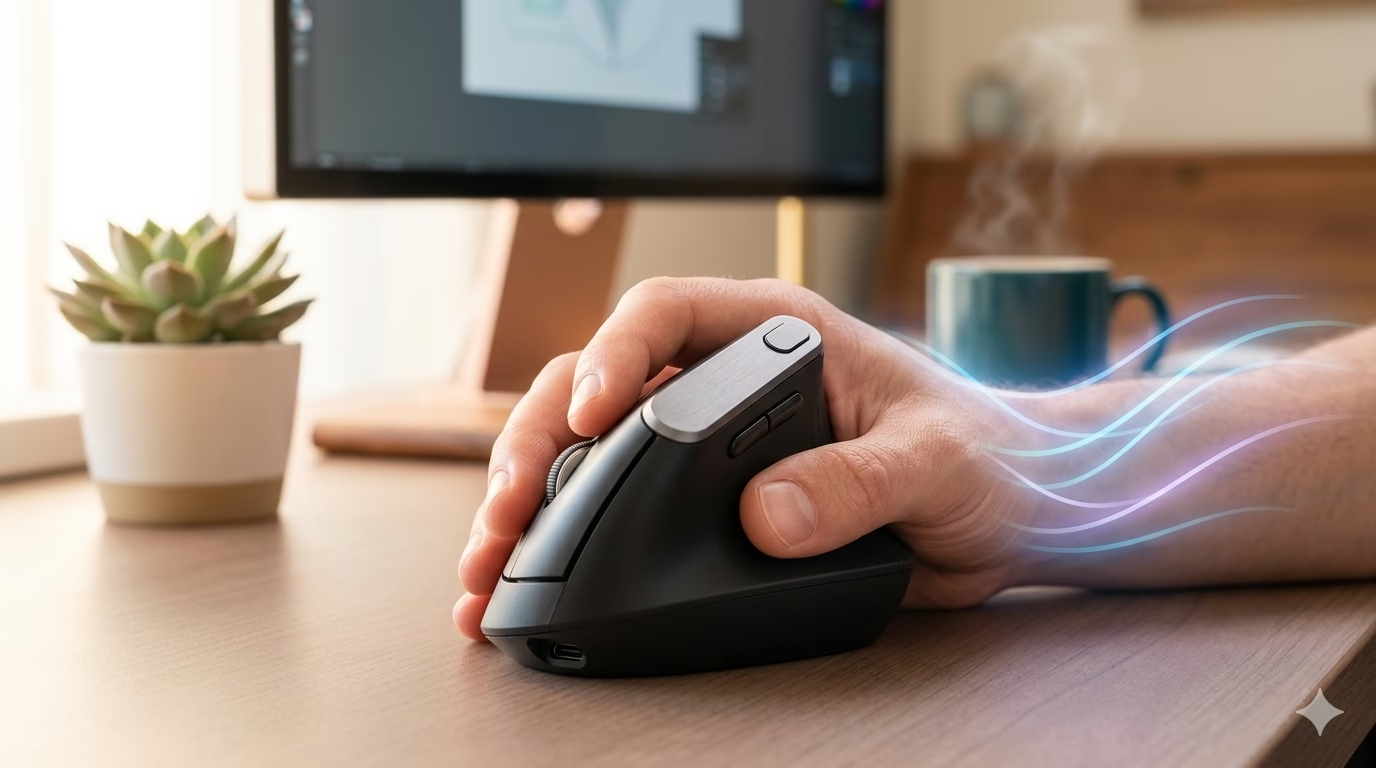

If you spend more than four hours a day at a computer, your wrists are likely screaming for a break. That sharp, electric tingle or the dull ache that travels from your palm to your elbow isn’t just tiredness it is a warning sign. Carpal Tunnel Syndrome (CTS) is a serious repetitive strain injury that affects millions of office workers.
However, the solution might be simpler than you think: swapping your traditional mouse for a high-quality vertical mouse for carpal tunnel.
In this guide, we will explore why this ergonomic shift is the gold standard for pain relief and how it can save your career from a surgical intervention.
The Anatomy of the Ache: Why Flat Mice Fail
Traditional mice are designed for a world that didn’t understand human anatomy. When you lay your palm flat on a standard mouse, your radius and ulna (the two bones in your forearm) cross over each other. This is called pronation.
Pronation puts immense pressure on the median nerve, which runs through the narrow carpal tunnel in your wrist. According to the National Institute of Neurological Disorders and Stroke (NINDS), this compression leads to the numbness and weakness associated with CTS. By switching to a vertical mouse for carpal tunnel, you eliminate this “twist,” allowing your arm to rest in a natural, neutral “handshake” position.
5 Reasons to Switch to a Vertical Mouse for Carpal Tunnel Today
- Neutral Forearm Alignment: The 57° to 60° angle of a vertical mouse mimics your body’s natural resting state. This reduces muscle activity in the forearm by up to 10% compared to a standard mouse.
- Zero Wrist Extension: Most people “flick” a standard mouse using only their wrist. A vertical mouse for carpal tunnel encourages you to use your larger pivot points—your elbow and shoulder—which are designed for repetitive movement.
- Decompression of the Carpal Tunnel: By lifting the thumb side of the hand, you remove the direct “rubbing” of the median nerve against the desk surface.
- Improved Circulation: Better posture means better blood flow. When your muscles aren’t constricted, your hand stays warmer and more responsive throughout the day.
- Long-Term Productivity: You can’t type if you’re in a splint. Investing in a vertical mouse for carpal tunnel is a proactive step to ensure you stay at your desk and out of the doctor’s office.
What the Experts Say
Government health organizations have long advocated for better workspace setups. The Occupational Safety and Health Administration (OSHA) emphasizes that “the pointer should be positioned at the same height as the keyboard” and that users should avoid resting their wrists on hard edges.
Furthermore, the Centers for Disease Control and Prevention (CDC) suggests that ergonomic interventions are critical in preventing Musculoskeletal Disorders (MSDs). A vertical mouse for carpal tunnel is one of the most effective, low-cost interventions available to modern workers.
Is It Hard to Learn?
A common concern is the learning curve. While it feels different for the first 20 minutes, most users report that a vertical mouse for carpal tunnel feels intuitive within a single workday. Because the buttons are positioned where your fingers naturally curl, the “click” feels more like a gentle squeeze than a downward tap.
Final Verdict: Protect Your Hands
Don’t wait until the pain becomes unbearable. If you’re already feeling symptoms, the time to act is now. A vertical mouse for carpal tunnel isn’t just a peripheral; it is a piece of protective equipment for your body.
When you choose a vertical mouse for carpal tunnel, you aren’t just buying a gadget; you are buying years of pain-free productivity. Your future self (and your wrists) will thank you.
[Click Here to See Our Top Recommended Vertical Mouse Your Wrists Deserve This!]