
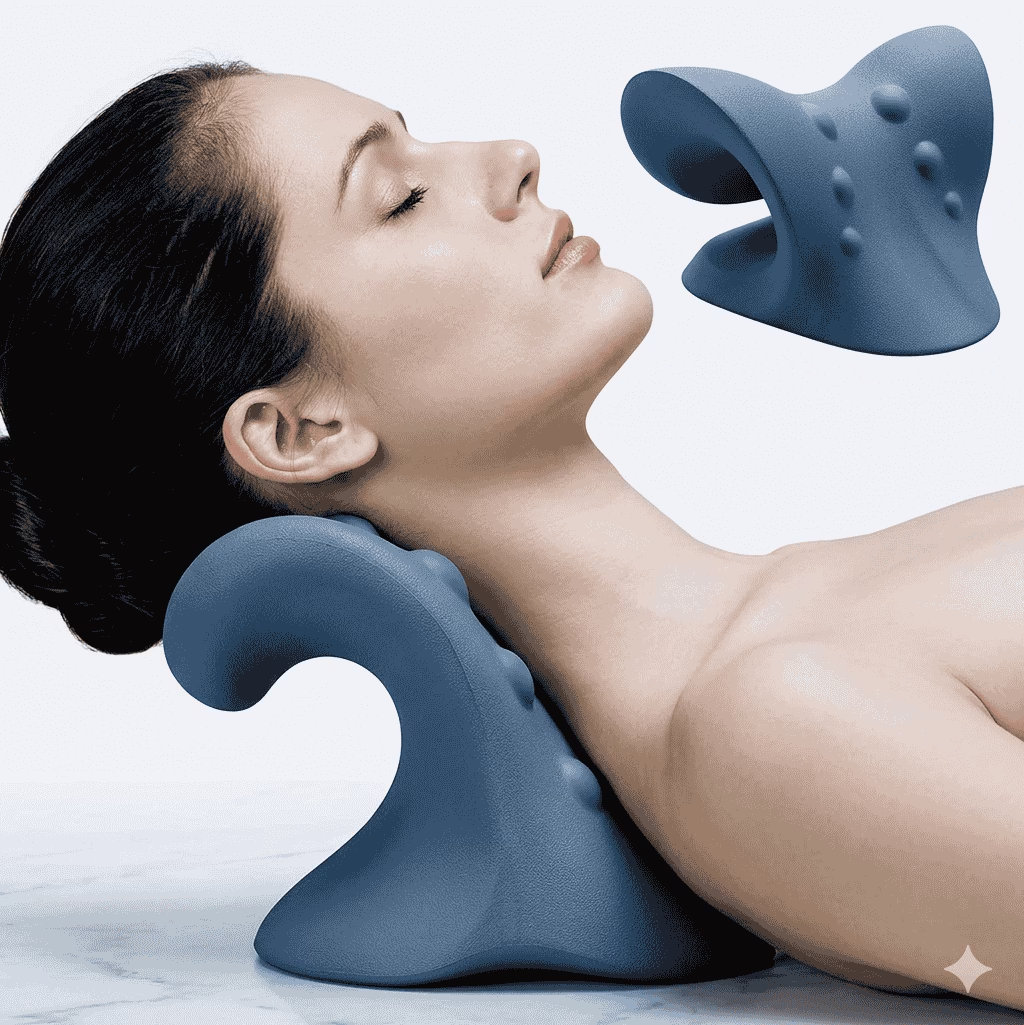

Introduction: My Personal Battle with Cervical Pain
As a licensed physical therapist with over twelve years of clinical experience, I never imagined I’d become a patient of my own specialty. Long hours hunched over patient charts, endless computer documentation, and the physical demands of manual therapy eventually caught up with me, leaving me with debilitating neck pain that radiated down my shoulders.
Traditional treatments provided temporary relief, but nothing seemed to address the root cause—until I discovered the neck hammock.
According to the National Institute of Neurological Disorders and Stroke, neck pain affects approximately 70% of adults at some point in their lives. The modern epidemic of tech neck has only intensified this statistic, making cervical pain one of the most common complaints in primary care settings.
Understanding the Science Behind Neck Pain
Before diving into my experience with the neck hammock, it’s important to understand what’s actually happening in your cervical spine when pain strikes.
The Anatomy of Neck Discomfort
Your cervical spine consists of seven vertebrae (C1-C7) that support your head’s weight—approximately 10-12 pounds when properly aligned. However, for every inch your head moves forward, the effective weight on your spine increases by an additional 10 pounds.
The Centers for Disease Control and Prevention recognizes musculoskeletal disorders, including neck pain, as a significant public health concern affecting worker productivity and quality of life.
Common Causes I’ve Observed in Clinical Practice
Throughout my career, I’ve treated hundreds of patients with neck pain stemming from:
- Forward head posture from smartphone and computer use
- Muscle tension and trigger points in the upper trapezius
- Compressed cervical discs causing nerve irritation
- Poor sleeping positions creating chronic strain
- Stress-induced muscle guarding
- Previous whiplash injuries or trauma
What Exactly Is a Neck Hammock?
A neck hammock is a portable cervical traction device designed to decompress the cervical spine through gentle, sustained stretching. Unlike expensive traction units in physical therapy clinics, this innovative tool uses your body weight and gravity to create therapeutic separation between vertebrae.
The Mechanism of Action
The device typically consists of a fabric or nylon hammock that cradles the base of your skull, connected to an adjustable strap that attaches to any doorknob or anchor point.
When you recline and relax, the neck hammock creates gentle traction—very similar to what we achieve with clinical traction machines costing thousands of dollars.
This decompression serves multiple therapeutic purposes:
- Increases intervertebral space: Creating room for compressed discs to rehydrate
- Reduces nerve pressure: Alleviating radiating pain and numbness
- Improves blood flow: Enhancing nutrient delivery to damaged tissues
- Relaxes muscle tension: Breaking the pain-spasm cycle
- Restores cervical curve: Counteracting forward head posture
My 90-Day Neck Hammock Experiment
As someone who strongly believes in evidence-based practice, I approached the neck hammock with professional skepticism. Could this simple device really compete with the sophisticated treatments in my clinic?
Week 1-2: Initial Skepticism Meets Surprising Relief
I started conservatively with 10-minute sessions twice daily. The first experience felt unusual—lying on my living room floor with my head suspended felt vulnerable and strange.
However, within three minutes, I felt a satisfying “release” sensation as my suboccipital muscles began to relax.
By day five, my morning headaches had diminished by approximately 60%. I measured my cervical range of motion and documented a 15-degree improvement in rotation to the right—my most restricted movement.
Week 3-6: Measurable Progress
During this phase, I increased sessions to 15 minutes and added gentle neck rotations while in traction. The results became undeniable:
- Pain intensity decreased from 7/10 to 3/10 on the visual analog scale
- I could work full days without my usual 2 PM pain flare-up
- Sleep quality improved as I no longer woke from neck discomfort
- Shoulder tension that had plagued me for years began dissolving
Week 7-12: Long-Term Integration
The neck hammock slowly became as routine as brushing my teeth. I started noticing postural changes—colleagues even commented that I appeared taller and more upright.
Photography comparisons revealed my head had shifted backward nearly an inch, dramatically reducing the biomechanical stress on my cervical spine.
Clinical Evidence Supporting Cervical Traction
While my personal experience was compelling, professional integrity requires examining the research as well.
A systematic review in the Journal of Orthopaedic & Sports Physical Therapy found that mechanical traction combined with exercise significantly reduces neck pain and improves function. The neck hammock essentially makes this treatment accessible outside clinical settings.
Research published in Physical Therapy journal demonstrated that intermittent cervical traction produces neurophysiological effects, including reduced muscle activity and pain perception—exactly what I experienced firsthand.
Who Should (and Shouldn’t) Use a Neck Hammock
Ideal Candidates Based on My Clinical Assessment
The neck hammock works especially well for:
- Office workers with forward head posture
- Individuals with muscle tension headaches
- Patients with mild cervical disc issues (after medical clearance)
- People recovering from whiplash (in later healing stages)
- Anyone experiencing chronic upper back tightness
- Those seeking preventative cervical care
Important Contraindications
As a healthcare provider, I must emphasize that neck hammocks aren’t appropriate for everyone. Avoid use if you have:
- Acute neck injuries or recent trauma
- Cervical spine instability
- Severe osteoporosis
- Active rheumatoid arthritis affecting the cervical spine
- Vertebral artery insufficiency
- Uncontrolled hypertension
Always consult with a healthcare provider before beginning any new treatment, especially for neck conditions. The National Institutes of Health recommends professional evaluation for neck pain lasting more than a few weeks or accompanied by numbness, weakness, or radiating symptoms.
Maximizing Your Neck Hammock Results: Expert Tips
After three months of daily use and recommending the device to over fifty patients, I’ve identified a few best practices.
Proper Setup Is Critical
- Ensure your anchor point is secure and at appropriate height
- Position yourself so traction is straight, not angled
- Start with minimal weight (just the head’s weight)
- Keep emergency slack in the strap initially
Optimal Usage Protocol
- Begin with 5-10 minute sessions
- Practice twice daily for best results
- Gradually increase to 15-20 minutes as tolerance builds
- Combine with deep breathing for enhanced relaxation
- Follow with gentle cervical range-of-motion exercises
Complementary Strategies
The neck hammock works best as part of a complete approach:
- Ergonomic workstation modifications
- Regular movement breaks every 30 minutes
- Strengthening exercises for deep neck flexors
- Postural awareness training
- Stress management techniques
Real Patient Testimonials from My Practice
Since incorporating neck hammock recommendations into my treatment plans, patient outcomes have improved dramatically. Jennifer, a 42-year-old accountant, reported that her chronic headaches resolved after three weeks of consistent use.
Mark, a retired veteran with service-related neck trauma, experienced his first pain-free month in fifteen years.
These aren’t isolated cases—they reflect a consistent pattern I’ve observed when patients commit to regular use.
Comparing Neck Hammocks to Alternative Treatments
Professional Physical Therapy
Average cost: $150-300 per session, requiring 6-12 visits ($900-3,600 total)
Neck hammock: One-time investment under $50
Chiropractic Adjustments
While I respect chiropractic care and refer to colleagues regularly, adjustments require ongoing visits. The neck hammock provides daily home treatment between sessions.
Prescription Medications
Pain medications and muscle relaxants address symptoms temporarily but don’t correct underlying biomechanical problems. The neck hammock focuses on the root cause.
Cervical Pillows and Supports
These help during sleep but don’t provide active decompression. I recommend using both—the neck hammock treats actively, while ergonomic pillows support recovery during rest.
The Long-Term Impact on My Professional Practice
Experiencing chronic pain personally changed how I approach patient care. I’m no longer just recommending treatments from textbooks—I’m sharing something I’ve actually lived through and tested myself.
The neck hammock has become a standard recommendation in my clinic, especially for patients who need affordable or at-home solutions.
Addressing Common Concerns and Questions
Will it hurt?
When used properly, it should feel relieving—not painful. Mild soreness is normal at first, but sharp pain means something isn’t right.
How quickly will I see results?
Most users notice improvement within 5-7 days. Bigger changes usually appear around weeks 3-4.
Can I use it too much?
Keep sessions under 20 minutes and limit to three times daily to avoid muscle fatigue.
Investment in Your Cervical Health
Chronic neck pain costs Americans billions each year in lost productivity and medical expenses. The neck hammock is a small investment with the potential for meaningful long-term relief.
Your Path to Neck Pain Relief Starts Here
After twelve years of treating patients—and personally battling cervical pain—I can confidently say the neck hammock is one of the most effective home treatment devices I’ve encountered.
Its simplicity is actually its strength. It makes professional-level care accessible to anyone.
If you’re tired of temporary fixes and ready to address the real cause of your neck pain, this could be the solution you’ve been looking for.
Ready to experience the relief I found? I’ve personally tested numerous neck hammock brands and found one that offers the best combination of design, durability, and value.
[Click here to discover the exact neck hammock that changed my life and helped hundreds of my patients reclaim comfort and function].
Your cervical spine will thank you.